Washed Up and Weirdly Wise: Why the Internet's Best Philosophers Used to Open for Nickelback
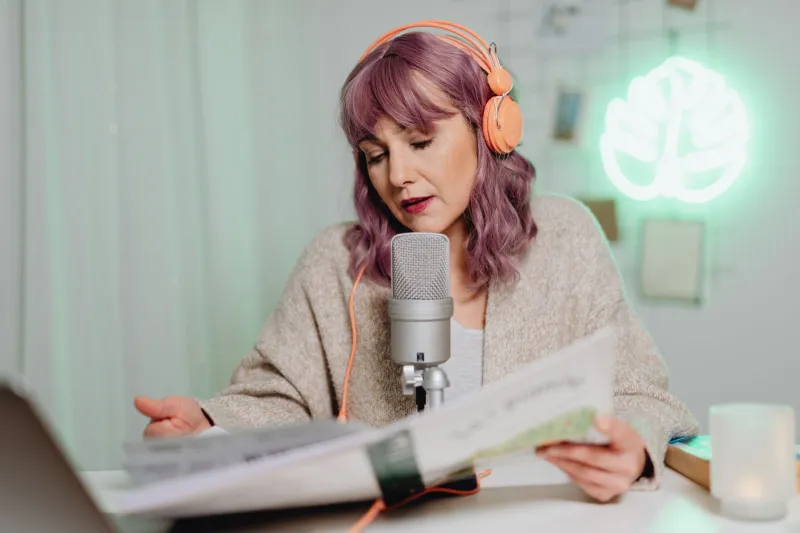
There is a man on YouTube who spent three years playing the sarcastic neighbor on a mid-2000s family sitcom that you watched exactly twice in a hotel room. He has 340,000 subscribers. His latest video — a forty-minute essay on the philosophy of creative failure — has more thoughtful comments than most TED Talks. And he posted it from what appears to be a converted garage in Burbank.
This is not an anomaly. This is a movement.
The Paradox of Productive Irrelevance
Here's the thing nobody in Hollywood's PR industrial complex wants to admit: fame, real fame, is basically a sensory deprivation tank for the soul. When you're an A-lister, every opinion gets stress-tested by a publicist, a manager, a brand deal coordinator, and possibly a guy whose entire job is to make sure you never say anything that upsets anyone in a market over 500,000 people.
The result? Content that tastes like airport food. Technically edible. Spiritually empty.
B-listers, on the other hand, have been quietly excused from that particular prison. Once the studios stop returning your calls and the tabloids lose your number, something remarkable happens: you start saying what you actually think. You start making things because you want to make them. You start hosting Discord servers at midnight where you answer questions about whether Hollywood actually cares about storytelling anymore (spoiler: the answer is long and involves a lot of profanity).
The audience notices. Gen Z, a demographic professionally allergic to anything that feels manufactured, notices especially.
Why the Algorithm Accidentally Loves a Has-Been
Let's talk about how this works mechanically, because it's genuinely strange. The YouTube and podcast ecosystems weren't designed to rehabilitate fading celebrities. They were designed to sell ads against cat videos and true crime. But the recommendation engine is, at its core, a machine that rewards specificity and consistency — two things that B-list celebrities, freed from the obligation of mass appeal, have in abundance.
A former teen heartthrob who now makes weekly deep-dives into the history of practical effects in low-budget horror films isn't competing with Dwayne Johnson's Instagram. He's competing with other practical effects channels. And in that arena, the fact that he once actually worked on a set, touched real fake blood, argued with a director about whether a monster suit looked stupid — that's not a consolation prize. That's a credential.
Niche communities don't want celebrities. They want insiders. And washed-up celebrities are, quietly, the most accessible insiders on the internet.
The Patreon Confessional
If you want to understand where this phenomenon gets genuinely weird, look at Patreon. Specifically, look at the subscription tiers.
A mid-tier actress from an early 2000s WB drama — the kind of show that had its own soundtrack album and a fanbase that briefly had a Livejournal community — is now running a $12-a-month Patreon where she records voice memos about creative burnout, reads listener letters about career anxiety, and occasionally does live readings of scripts she wrote that never got made. Her top tier is $45 a month and includes a monthly Zoom call with roughly fifteen people who are, by all accounts, deeply invested in her opinions about the relationship between artistic integrity and financial survival.
Is this sad? The tabloid framing would say yes. The internet framing says: this woman has built a functional, sustainable creative community that actually talks about things, and her audience trusts her in a way that no algorithm-optimized influencer has managed to replicate.
That's not a cautionary tale. That's a blueprint.
Gen Z Doesn't Want a Role Model. They Want a Survivor.
Here's the generational wrinkle that makes this whole thing click into place. Millennials grew up being sold the idea that success was linear — you worked hard, you got famous, you stayed famous, you won. Gen Z grew up watching that narrative collapse in real time. They watched influencers burn out, celebrities implode, and the traditional entertainment industry slowly eat itself.
What they want now isn't someone who made it. They want someone who almost made it, hit a wall, and then figured out what to do next. That's a story with actual information in it. That's a story with texture.
A guy who had three seasons on a network procedural and then pivoted to a podcast about stoicism and bad career decisions isn't a failure narrative to a twenty-two-year-old. He's a case study in adaptability. His failures are the receipts that make his advice credible. You can't fake having been dropped by your agent. You can't manufacture the specific kind of humility that comes from doing a regional theater production of Rent a decade after your face was on a billboard in Times Square.
The Authenticity Economy Has Weird Winners
We talk a lot about the authenticity economy — the idea that audiences are increasingly paying for realness over polish. What we talk about less is who actually benefits from that shift. The obvious answer is micro-influencers, indie creators, and people who film themselves crying in their cars.
The less obvious answer is the guy from that one show. You know the one.
Because B-list celebrities occupy a genuinely unique position in the authenticity economy. They have enough cultural legibility that people give them a chance — there's a name, a face, a vague memory of a performance that wasn't terrible. But they don't have enough current cultural weight to be suspicious. Nobody is wondering what a former supporting player on a mid-2000s legal drama is selling. Nobody thinks his forty-minute video essay on creative identity is a brand deal in disguise.
That trust is worth more than a verified checkmark. In 2025, it might be worth more than a Netflix deal.
The Garage in Burbank Is a Feature, Not a Bug
Back to the man in the converted garage. His setup is bad. The audio is fine but not great. The lighting occasionally makes him look like he's being interviewed about a cold case. None of this matters to his audience, because the content of what he's saying is so specifically, genuinely his that the production value is almost beside the point.
This is the Lonely Island Effect, named for nobody in particular and everything in general: the phenomenon where distance from the mainstream creates the conditions for actual creative thought. Where the absence of an audience paradoxically produces content that audiences actually want.
The celebrities who are currently most culturally influential might not be the ones on magazine covers. They might be the ones you find at 1 a.m., three episodes into a podcast you didn't know existed an hour ago, thinking: how does this person I barely remember understand exactly what I'm going through?
The answer, it turns out, is that they went through something too. They just had to lose their publicist first.