Murder, Laughs, and the Algorithm: Why Gen Z's True Crime Diet Is Deliberately Unhinged
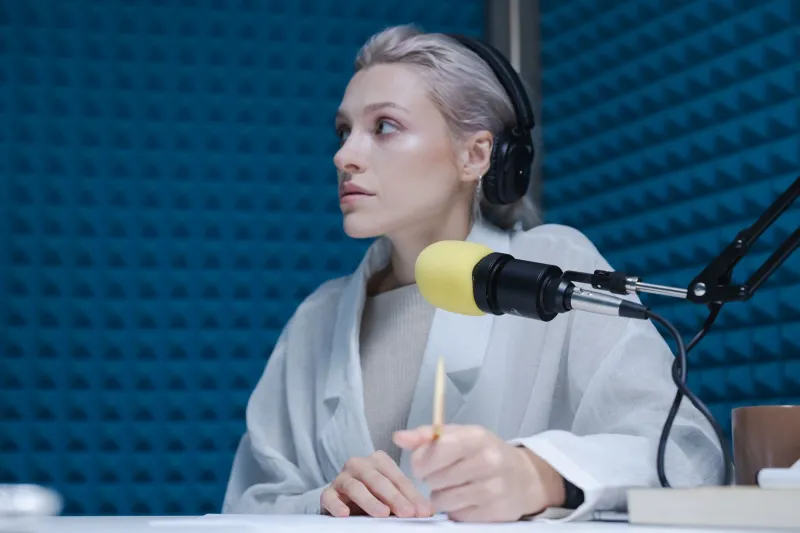
Let me describe a podcast for you. Two hosts, probably recording from a home studio that doubles as a guest bedroom. Intro music that is aggressively, almost combatively upbeat. The first fifteen minutes are about one host's ongoing feud with their landlord and a shared tangent about a fast food item that no longer exists. Then, with minimal transition, they begin discussing a 1987 unsolved disappearance in rural Ohio with the same casual energy they were just using to discuss Taco Bell menu losses. There are jokes. There are gasps. There is genuine research mixed with commentary that would make a criminology professor physically leave the room.
This podcast has four and a half stars and two hundred thousand subscribers. Its audience skews 18-to-28. Its fans refer to themselves by a collective nickname and have a subreddit. Someone made fan art of the hosts as animated characters.
This is the current state of true crime content for a significant portion of American Gen Z, and if you're over thirty-five, you probably have Thoughts about it. You're not entirely wrong. But you might be missing something.
The Clinical Era Is Over (They Killed It)
To understand where we are, you have to understand where we came from. True crime as a prestige format was essentially codified by Serial in 2014 — careful, journalistic, emotionally measured. The genre expanded from there into a decade of podcasts, docuseries, and streaming specials that mostly adhered to a set of unspoken rules: take the subject seriously, center the victims, maintain a respectful tone, and frame the whole enterprise as something approximating public service journalism.
This format produced genuinely important work. It also became, over time, a genre with a recognizable aesthetic that audiences — particularly younger ones — began to find slightly performative. The Serious True Crime Voice. The tasteful piano music under the heavy parts. The careful disclaimer at the top of each episode. These conventions weren't dishonest, exactly, but they created a specific emotional distance that started to feel, to some listeners, like a costume. Sincerity cosplaying as gravitas.
Gen Z, as a generation that has grown up with algorithmic content, parasocial relationships, and a general cultural suspicion of anything that feels too produced, noticed the costume.
What 'Unhinged' Actually Means Here
The word 'unhinged' gets used a lot to describe this new wave of true crime content, and it's worth being precise about what that actually looks like in practice — because it's not, for the most part, disrespectful in the way critics assume.
What chaotic true crime podcasts tend to do is collapse the distance between host and audience. They don't pretend the hosts are neutral observers. They let the conversation wander. They acknowledge, explicitly and often, that engaging with true crime content is a weird thing to do, that enjoying it raises complicated questions, and that sitting with that discomfort is part of the experience rather than something to be tidied away with a disclaimer.
The dark humor isn't usually directed at victims. It's directed at systems — at the police departments that botched investigations, at the media coverage that got things embarrassingly wrong, at the broader cultural machinery that turns real tragedy into entertainment (including, with some self-awareness, the podcast itself). It's meta-commentary delivered in the format of a conversation between friends, which is exactly what it sounds like and exactly why it resonates.
Processing Trauma Through the Side Door
Here's the part that the discourse around this genre consistently underweights: Gen Z is genuinely processing something through this content, and comedy is a legitimate vehicle for that processing.
This is a generation that grew up with school shooting drills. That came of age during a pandemic. That has watched economic anxiety, climate news, and political instability become the background radiation of daily life. The clinical, measured approach to discussing violence and tragedy — however well-intentioned — can feel, from inside that experience, like being handed a very formal document about something you're living through.
Dark humor has always been how humans cope with things that are too large or too frightening to approach directly. Soldiers do it. Emergency room workers do it. Families do it at funerals when the grief gets too heavy to carry without a moment of absurdity. The idea that this mechanism is somehow inappropriate when it appears in podcast form is, at minimum, worth interrogating.
What the unhinged true crime format offers is permission to feel multiple things simultaneously — to be genuinely disturbed by a case and to laugh at something adjacent to it, to care about the victim and to find the investigative incompetence infuriating in a way that produces dark comedy rather than clean outrage. That simultaneity is closer to how people actually feel than the single-note solemnity of prestige true crime.
What We Should Actually Be Asking
The more interesting question isn't whether Gen Z's true crime preferences are appropriate — it's what those preferences reveal about authenticity as a cultural value.
For younger audiences, authenticity has become the primary currency of trust. A host who admits they don't know something, who goes on tangents, who laughs uncomfortably at their own discomfort — that host feels real in a way that a carefully produced documentary narrator does not. The roughness is the point. The chaos is the credential.
This has implications well beyond true crime. It explains a lot about which creators thrive on TikTok versus YouTube, about why 'raw' content consistently outperforms 'polished' content with younger demographics, about the entire architecture of parasocial relationships in 2024. True crime just happens to be the genre where this tension is most visible, because the stakes of tone feel highest.
None of this means the chaotic true crime format is above criticism. There are real ethical lines around victim dignity and responsible speculation that some podcasts cross, and that's worth calling out specifically when it happens rather than condemning the entire aesthetic.
But the impulse behind it — to engage with darkness honestly, messily, and without pretending the engagement itself is uncomplicated — is not a generational failure. It might actually be a more honest relationship with the material than the alternative.
Which is a very serious conclusion to reach about a podcast that spent twenty minutes discussing discontinued Taco Bell items first. And somehow that feels right.