Weird Went to Market: The Complete History of How the Internet Sold Your Subculture Back to You
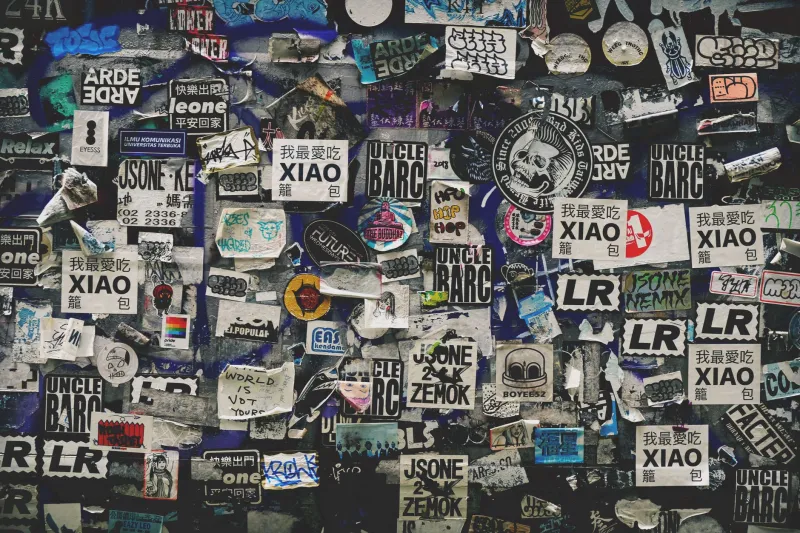
There is a specific feeling — sharp, brief, and difficult to fully articulate — that you get when you discover that the obscure thing you loved has a section at Urban Outfitters. It's not quite betrayal. It's not quite pride. It's somewhere in the vicinity of watching a very strange, very specific inside joke get explained to an audience of millions, flattened in the translation, and then sold as a graphic tee for $38.
This has been happening with accelerating speed since approximately 2019, and TikTok is the primary mechanism — though not the only one, and not the only thing to blame. What we're watching, in real time, is the complete compression of the subculture lifecycle. The gap between 'underground community with its own language and rituals' and 'mainstream aesthetic with a sponsored hashtag' used to be measured in years, sometimes decades. Now it's measured in months. Sometimes weeks.
Let's go through the receipts.
Cottagecore: From Forest Hermit Fantasy to Fast Fashion in One Season
Cottagecore, for anyone who missed its moment, was an aesthetic subculture organized around a specific fantasy: a slow, pastoral life involving linen, mushrooms, bread-baking, and a general rejection of modernity. It lived on Tumblr first, then migrated to Instagram, where it developed a genuine community of people who were, in many cases, processing real anxieties about urban life, productivity culture, and digital overwhelm through the visual language of imaginary countryside domesticity.
The aesthetic was specific, internally coherent, and — crucially — not designed for mass consumption. The practitioners knew each other. There were in-jokes. There was a shared vocabulary. There was genuine community infrastructure.
Then TikTok found it. By mid-2020, cottagecore was everywhere. Which sounds like a success story until you look at what 'everywhere' actually meant: fast fashion brands releasing 'cottagecore collections' made from synthetic fabrics, influencers performing the aesthetic without any apparent engagement with its underlying ethos, and eventually a Target home goods line that used the word 'cottagecore' in its marketing copy without any apparent awareness of irony.
The original community didn't disappear. But it became invisible beneath the volume of the mainstreamed version — which was, essentially, a Pinterest board with a brand deal.
Analog Horror: The Speedrun From Cult to Commodity
If cottagecore's commodification was gradual enough to watch in slow motion, analog horror's was practically instantaneous by comparison.
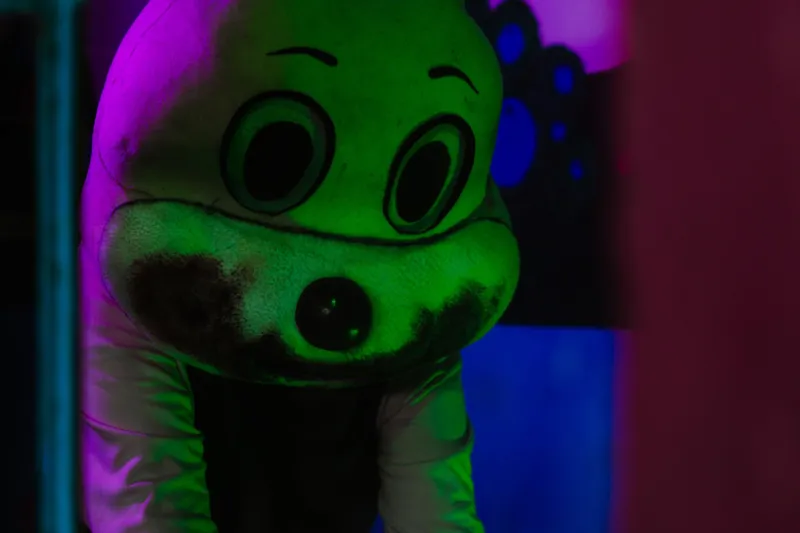
Analog horror — the genre of YouTube content that simulates found footage from fictional vintage broadcasts, VHS tapes, and emergency transmissions — was a genuinely niche corner of internet creativity. Channels like Marble Hornets had laid groundwork years earlier, but the genre crystallized around 2020-2021 with creators like Local58 and The Mandela Catalogue, who were building elaborate, internally consistent fictional universes for audiences that numbered in the tens of thousands and engaged with the content like an ARG — analyzing frames, building wikis, constructing theories.
The community was small, engaged, and operating with a level of collective attention that mainstream entertainment can rarely generate. It was, in other words, exactly the kind of thing that looks extremely attractive to a brand strategist.
Within a year of the genre reaching mainstream awareness via TikTok compilation videos, the merchandise appeared. Stickers. Enamel pins. Shirts featuring imagery from specific videos, sometimes produced by the creators themselves but increasingly produced by third-party sellers who had simply identified a market. The aesthetic — grainy, unsettling, deliberately low-fi — was extracted from its context and applied to unrelated products, which is roughly the equivalent of taking the specific emotional texture of a nightmare and putting it on a phone case.
Some of the original creators navigated this well, using the increased audience to fund more ambitious projects. Others watched their specific visual language become a generalized 'creepy vintage' aesthetic that bore only a surface resemblance to what they'd built.
Alt-Girl Aesthetics and the Infinite Regress of Irony
The alt-girl aesthetic — a loose constellation of influences including 2000s emo, e-girl culture, DIY fashion, and deliberate anti-mainstream posturing — presents a particularly complicated case because its relationship with commodification was always ironic and therefore always partially immune to it and also completely vulnerable to it simultaneously.
When Hot Topic was the destination for this aesthetic, the commodification was at least honest about what it was. When the aesthetic migrated to TikTok and began generating massive engagement, the brands that followed were more sophisticated. They didn't just sell the clothes — they sold the identity. The anti-mainstream posture was itself packaged as a product, which created a logical paradox that the algorithm cheerfully ignored.
The result is an aesthetic that is simultaneously mainstream and performing non-mainstream, sold at scale while claiming to resist scale, which is either deeply incoherent or a perfect representation of how identity functions in late-stage social media culture, depending on your level of generosity.
The Subcultures That Didn't Get Eaten
Not every underground community has been successfully strip-mined for aesthetic content, and the ones that survived tend to share specific characteristics worth examining.
Structural resistance: Some communities have built themselves around practices that don't translate to passive consumption. If participation requires skill, sustained engagement, or physical presence, the TikTok-to-Target pipeline has fewer entry points. Certain corners of the DIY music scene, zine culture, and maker communities have maintained integrity partly because you can't really sell 'making your own thing' as a product — the product is the process.
Deliberate obscurity: Some subcultures have actively resisted documentation and external attention. They don't post. They don't explain themselves to outsiders. They exist in spaces the algorithm can't easily index. This is a choice with real costs — limited community growth, reduced access — but it's also a coherent strategy.
Embracing the contradiction: A smaller number of communities have found ways to engage with mainstream attention without being consumed by it, usually by maintaining enough internal complexity that the exported version is obviously incomplete. The outsider can buy the aesthetic, but they can't buy the context, and the context is where the actual community lives.
What Authenticity Costs Now
The uncomfortable conclusion is that the internet didn't just discover and commodify weird — it created a system where the discovery and commodification are now essentially simultaneous. The moment something becomes legible enough to spread, it becomes legible enough to sell. The lag time between those two events has approached zero.
This means that the communities most likely to remain genuinely countercultural are the ones willing to be genuinely inaccessible — which is a different kind of cost than it used to be, in an era when visibility feels like oxygen.
There's no clean resolution here. The $38 graphic tee exists. The Target cottagecore section existed. The analog horror enamel pins are in someone's Etsy cart right now. Weird went to market, and market is where it lives now.
The question is whether anything genuinely strange can survive in the margins of that market long enough to matter — and whether we care enough about the margins to go looking.