Mascots From the Void: The Promotional Creatures Hollywood Quietly Buried and Hoped You'd Forget
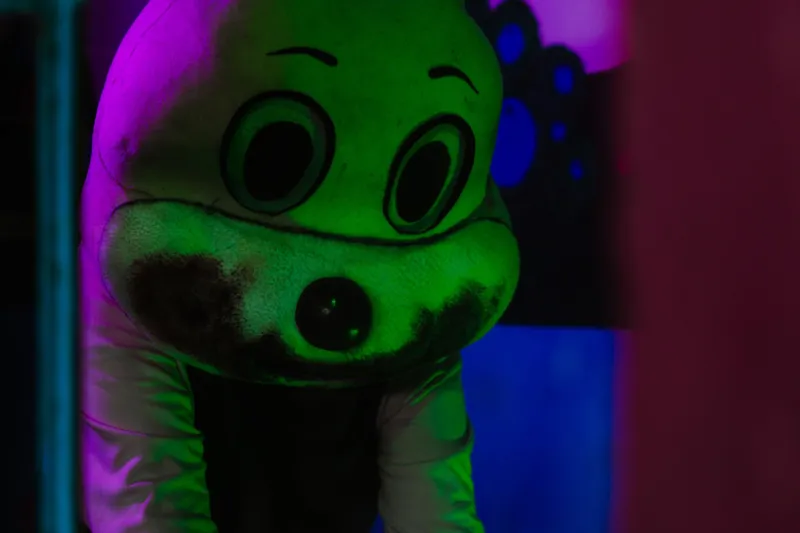
There is a specific kind of corporate regret that only exists in the entertainment industry. It's the regret of a marketing executive who signed off on a seven-foot foam creature with blinking LED eyes, watched it terrorize children at a mall appearance in Burbank, and then had to write a very carefully worded internal memo titled something like Re: Discontinuation of Brand Character Initiative. It's a specific, haunted kind of regret. And we, the curious and slightly unwell audience of the internet, are absolutely here for it.
Hollywood has a long, deeply weird history of inventing promotional mascots for films that had no business having mascots. Not every movie is Pikachu. Not every studio is Disney. And yet — with extraordinary optimism and apparently unlimited budgets — marketing departments across Los Angeles have repeatedly decided that what their gritty thriller, their mid-budget sci-fi romp, or their R-rated animated feature really needed was a walk-around character. A face. A brand ambassador with a costume and a handler and, ideally, a social media presence.
The results were, to put it generously, mixed.
The Creature That Ate the Premiere
Let's start with the category of mascots that were physically present at real-world events — because nothing tests the structural integrity of a promotional concept quite like putting it in a room with actual human beings.
In the early 2000s, a now-defunct studio greenlit a live-action creature costume for the promotional tour of what was supposed to be a franchise-launching creature feature. The mascot — a vaguely amphibious thing with too many fingers and a grin that read less friendly and more predatory — was deployed at a chain of mall appearances across the Midwest. According to people who were there (and who have spoken about it with the thousand-yard stare of veterans), the costume malfunctioned at the first stop. The eyes, which were supposed to light up in a cheerful amber, instead flickered erratically between red and off, giving the creature the distinct appearance of something experiencing a medical episode.
Children cried. Parents photographed it anyway, because this was the early internet era and people already understood that suffering was content. The mascot was quietly retired after three appearances. The film underperformed. No one connected the dots publicly, but everyone connected the dots privately.
The Digital Mascot That Became a Meme Before Memes Were Memes
Not all promotional disasters happened in the physical world. Some of them happened online, in the very early days of studio web presences, when marketing teams were experimenting with interactive Flash-based mascots that users could click on and receive... content from.
One particularly memorable example came from a mid-2000s horror franchise that decided its promotional website needed a mascot character — a cartoon version of the film's villain, rendered in a style that was somehow both too cute and too disturbing. The character would respond to mouse clicks with audio clips. It had a little animation cycle. It was, by the standards of 2005 web design, technically impressive.
It was also immediately and enthusiastically mocked in the earliest corners of internet culture. Forum threads cataloged its bizarre audio responses. Fan edits circulated. Someone made a parody version within two weeks of launch. The studio, not yet fluent in the language of internet humiliation, initially left the site up — which only accelerated the mockery. By the time they pulled it, the mascot had achieved a kind of ironic immortality that the actual film never managed.
The Theme Park Appearance Nobody Ordered
Theme park meet-and-greet appearances are a calculated gamble even under ideal circumstances. Characters need to be universally recognizable, physically manageable in a costume, and emotionally safe for all age ranges. Studios that ignored any one of these criteria paid for it in viral footage and PR cleanup.
The most instructive example is the brief, strange chapter of a mid-budget animated film from the late 1990s that negotiated a promotional partnership with a regional theme park. The film's mascot — an aggressively abstract character that made more sense as a two-dimensional drawing than as a three-dimensional foam suit — appeared at the park for one summer season. The costume was reportedly suffocating to wear, difficult to see out of, and deeply unsettling to look at from any angle below four feet tall, which is, of course, the exact height of most theme park visitors.
The handlers developed a system of subtle hand signals to communicate distress. The park's own staff reportedly avoided the character's designated meet-and-greet zone during peak hours. By August, the appearances had been reduced to twice daily. By the following spring, the character had simply ceased to exist. No announcement. No farewell. Just a gradual, merciful absence.
Why Did They Keep Doing This?
The honest answer is that mascots, when they work, work extraordinarily well. The upside of a beloved promotional character is brand recognition, merchandise revenue, and cultural longevity that advertising alone can't buy. Studios weren't being irrational — they were being optimistic in that very specific, very expensive way that large entertainment companies sometimes are.
The problem is that the conditions required for a successful mascot are actually quite narrow. The character needs to be visually simple, emotionally legible, and — crucially — not terrifying. Studios that tried to shortcut this process by adapting existing film characters (often designed to be menacing, complex, or deliberately unsettling) into family-friendly brand ambassadors were essentially trying to make a golden retriever out of a wolf. Technically the same genus. Practically a disaster.
The Ones That Survived (And What Made Them Different)
It's worth noting that not every studio mascot became a cautionary tale. The ones that survived tended to share a few qualities: they were designed for promotional use rather than adapted from narrative ones, they were simple enough to reproduce consistently across costume, digital, and print formats, and — perhaps most importantly — they were tested on actual human children before being unleashed on the general public.
The failures, almost universally, skipped that last step.
There is something almost poignant about these forgotten characters. They existed, briefly and earnestly, as someone's genuine attempt to create connection between an audience and a story. That the attempt went sideways, that the eyes flickered wrong or the costume was too hot or the internet found them before the marketing team did — that's not a story about stupidity. It's a story about the enormous gap between what entertainment companies imagine and what reality delivers.
Also, some of them were genuinely horrifying, and we should absolutely not let that go unacknowledged.
The mascots are gone. The memes, however, are forever.