The Velvet Rope Around the Weird Table: What Happens When Belonging Costs $9.99 a Month
I want to tell you about a Discord server I can't tell you the name of, because naming it would be unkind, and also because it's one of about forty that operate on the same basic model, so the name doesn't really matter.
The server is dedicated to a specific corner of underground music that I will describe only as "extremely niche" and leave it there. For about six years, the community that cared about this music gathered in various free, chaotic, semi-functional online spaces. Forums. IRC channels. A subreddit that was mostly arguing. A Facebook group that everyone hated but kept using anyway. The information was everywhere and nowhere. You had to dig. The digging was, in retrospect, part of the culture.
About two years ago, one of the scene's more prominent figures — a guy who ran a long-running blog about the music, wrote liner notes for reissues, genuinely knew his stuff — launched a Patreon. The top tier, at $15 a month, included access to a private Discord server. "The real conversation," he called it in the launch post. "The stuff that doesn't fit anywhere else."
I have thoughts about this. They are not entirely generous.
The Scarcity That Wasn't There Before
Let's be precise about what happened, because the mechanism matters. This person did not create new information or new community. He took existing social capital — a reputation built over years in a scene that existed before him and will exist after him — and used it to manufacture scarcity around access to his presence.
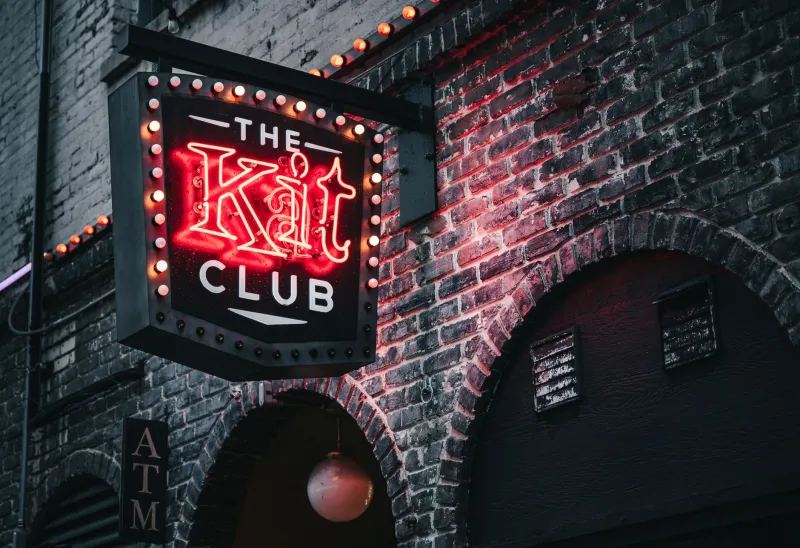
This is not a new move. It is, in fact, one of the oldest moves in the entertainment and media industry. The velvet rope exists specifically to make the thing behind it seem more valuable by making it less accessible. The trick works. It has always worked. The line outside the club makes the club worth waiting for.
What's new is applying this logic to subcultural knowledge and community. To the stuff that, by its nature, was never supposed to be exclusive. The whole point of underground scenes — music, art, gaming, whatever flavor of weird we're discussing — was historically that they were for the people who couldn't get into the regular places. The underground was the anti-velvet rope. The underground said: come in, it's weird in here, there's no door policy.
Now the underground has a Stripe integration.
What You're Actually Paying For
To steelman the paywalled weird economy for a moment — and it deserves at least a moment — there is a real argument that creators with genuine expertise deserve compensation for sharing it. The guy who has spent fifteen years documenting obscure music history has produced real value. Asking for $15 a month to access his more in-depth thoughts is not inherently exploitative.
The problem is what the paywall does to the thing around it. When you put a price on access to a community, you don't just filter for people who can afford it — though you do that too, and we should sit with that for a second. You also change what the community is. Paying members behave differently than free participants. The implicit transaction alters the social dynamics. People who pay $15 a month to be somewhere expect something from being there. They're customers, even if nobody uses that word.
And the host — the creator, the scene figure, the person whose Patreon this is — is now running a business. Whatever their intentions, they have financial incentives tied to the community's continued existence and growth. That changes what they say, how they say it, and who they're willing to alienate.
The conversation, in other words, is no longer free. Not in the financial sense, and not in the other sense either.
The Information That Got Left Outside
There is a specific kind of damage that happens when subcultural knowledge migrates behind paywalls, and it doesn't get talked about enough because it's invisible almost by definition.
When the real conversation moves to the $15-a-month Discord, the free spaces don't disappear. The subreddit keeps existing. The public forum keeps running. But they slowly hollow out. The people who know the most — the ones whose presence made the free space worth visiting — are now in the paid tier, having the "real conversation." What's left in the public space is increasingly the surface layer. The beginner questions. The discourse that doesn't require deep knowledge to participate in.
This is how you get a once-vital community that now mostly consists of newcomers asking questions that the old-timers used to answer, but don't anymore because the old-timers are somewhere else, somewhere paid, somewhere with a better signal-to-noise ratio.
The knowledge didn't disappear. It just got tiered. And the people who can't afford the tier — or who simply object, on principle, to paying for something that used to be free — get the knowledge-shaped hole where the community used to be.
Weirdness as Luxury Good
The deeper issue, the one that keeps me up at a reasonable hour thinking about Discord server economics, is what happens to the nature of weirdness when it gets packaged as a premium product.
Weirdness — genuine subcultural weirdness, the kind that actually creates new things and new ways of seeing — has historically been cheap to access and expensive to commodify. The barrier wasn't money. It was commitment. You had to care enough to find the thing, to learn the language, to put in the hours. That process of initiation was functional. It filtered for people who actually gave a damn, and it created shared context that made the community coherent.
The paywall is a different kind of filter. It filters for disposable income. And disposable income, as a proxy for genuine subcultural commitment, is a pretty terrible one. Rich people with casual interest in a scene can now buy their way past the commitment barrier. People who care deeply but are broke get left outside.
This is not a hypothetical. It's happening right now in music scenes, gaming communities, art collectives, and every other flavor of organized niche interest that has discovered Patreon.
The weird table now has a cover charge. And the people who built the weird table — who dragged it into the corner and painted it and made it strange and welcoming and theirs — are often not the ones who can afford to sit at it anymore.
That's not a business model. That's a betrayal with a welcome email.
Is There a Way Out
Probably not a clean one. The economic pressures on creators are real, and the demand for sustainability is legitimate. Nobody can run a scene on vibes and bandwidth forever.
But there are models that don't require manufacturing scarcity around belonging. Tip jars. One-time purchases. Paid for the work, free for the community. The distinction matters, even if it's harder to monetize.
The question worth asking, every time a paywall goes up around a space that used to be open, is: what exactly are we paying for? If the answer is the creator's labor — their writing, their curation, their specific expertise — that's one thing. If the answer is access to other people who also paid — if we're essentially buying our way into a social group — that's a different thing entirely.
One of those is a transaction. The other is a club. And clubs, in the end, are just the mainstream with better lighting and a more specific dress code.
The weird table was never supposed to have a dress code. That was the whole point of the weird table.