Documented to Death: The Instant an Aesthetic Gets a Wikipedia Page, It's Already Over

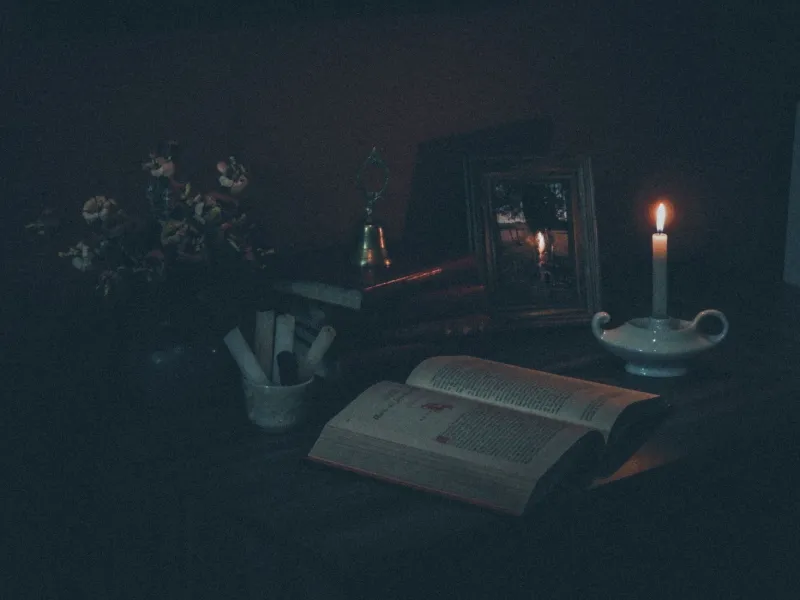
Photo by Photo by Peter Herrmann on Unsplash on Unsplash
Somewhere right now, a graduate student in a cultural studies program is writing a thesis. It has footnotes. It has a methodology section. It uses the word "liminal" fourteen times. And whatever subculture it's about — whatever strange, beautiful, half-feral corner of the internet it's dissecting — is being quietly euthanized with every paragraph.
This is not an accident. This is a pattern so reliable you could set a watch to it, if your watch also made you feel vaguely sad about the internet.
The Life Cycle of a Vibe Nobody Asked to Be Studied
Here's how it goes. Someone — usually several someones, usually broke, usually very online — starts gravitating toward a particular aesthetic. Maybe it's the specific melancholy of rain-soaked Victorian libraries and overpriced fountain pens. Maybe it's mushrooms and mud and the fantasy of living inside a moss-covered cottage far from your student loans. The thing takes shape in the negative space between Tumblr posts and Pinterest boards and Discord servers where people talk in lowercase at 2 a.m.
At this stage, the aesthetic doesn't have a name anyone agrees on. That's the point. The fuzzy edges are load-bearing. The vagueness is what makes it feel like yours.
Then someone names it. The name spreads. A BuzzFeed listicle appears. Then a think piece in a magazine that's trying to seem young. Then a Wikipedia stub. Then a full Wikipedia article with citations and a "History" section and a little infobox in the corner that lists it as a "subculture" under the broader category of "Internet culture."
And just like that: corpse.
What Documentation Actually Does to a Living Thing
The problem isn't that documentation is malicious. The problem is that documentation is accurate, and accuracy is lethal to anything that survives on ambiguity.
When cottagecore got its Wikipedia page — complete with a tidy origin story, named influences, and a neat list of associated media — the article wasn't wrong. It was just wrong in the way that a pinned butterfly is wrong. Technically correct. Completely motionless.
Aesthetics that live in the wild are defined by what they exclude as much as what they include, and those exclusions are never written down because the community just knows. There's a vibe. There's a texture. There's an implicit understanding among the people who are actually inside the thing about what counts and what doesn't. None of that survives the process of being turned into bullet points for a Wikipedia section titled "Characteristics."
Once the characteristics are listed, anyone can perform them. And once anyone can perform them, the community that built the thing has no home court advantage. The velvet rope is gone. The bouncer has been replaced by a mood board.
The Think Piece Industrial Complex
Wikipedia is just the most visible symptom. The broader disease is institutional recognition — the moment mainstream media and academia decide that your weird little corner of the internet is interesting enough to explain to people who were never there.
The explanation is always reductive. It has to be. You can't write a 1,200-word explainer about dark academia for a general audience without sanding off every rough edge, every in-joke, every implicit piece of shared context that made the community feel like a secret worth keeping. By the time the piece runs, the aesthetic has been translated into a language that non-participants can understand — which means it's been translated into something that non-participants can replicate.
And they do. God help us, they do. Within weeks of any major think piece, the thing is on Target shelves. It's in an influencer haul. It's a Spotify playlist with 400,000 followers curated by someone who definitely did not spend 2019 crying over Donna Tartt in a Discord server at 1 a.m.
The Taxonomy Problem
There's also something philosophically violent about categorization itself. Aesthetics that emerge organically from communities are inherently messy. They overlap. They contradict themselves. They shift based on who's in the room. They contain multitudes, as the saying goes, though the saying is now also on a tote bag.
Taxonomy kills multitudes. The moment you put a thing in a category — even a sympathetic, well-intentioned category — you've made a claim about what the thing is that forecloses what it might become. You've frozen it. You've made it legible to people who don't have the context to understand why legibility is the problem.
This is why the most alive aesthetics are always the ones nobody's quite figured out how to name yet. The ones where the community is still arguing about the definition. The ones where the Wikipedia article is a stub that someone keeps flagging for deletion. The ones that haven't been explained to anyone's parents.
So What Do We Do With This Information
Nothing, probably. The pattern is too useful to too many people for anyone to stop it. Media needs content. Academia needs subjects. Wikipedia needs articles. The whole machine runs on the process of finding living things and turning them into exhibits.
What you can do, if you're someone who genuinely loves a weird little aesthetic community, is enjoy the Wikipedia page as a tombstone rather than a birthday card. Read the citations. Appreciate the scholarship. And then go find the thing that's currently too chaotic and too small and too weird to be documented yet.
It's out there. It doesn't have a name anyone agrees on. It lives in the fuzzy space between three Discord servers and a niche Tumblr tag. It's full of people who would absolutely hate this article.
That's how you know it's still alive.